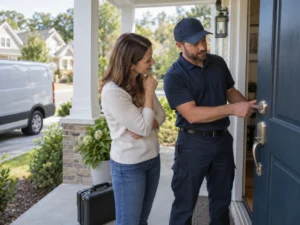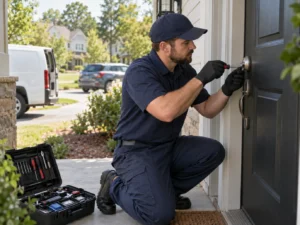
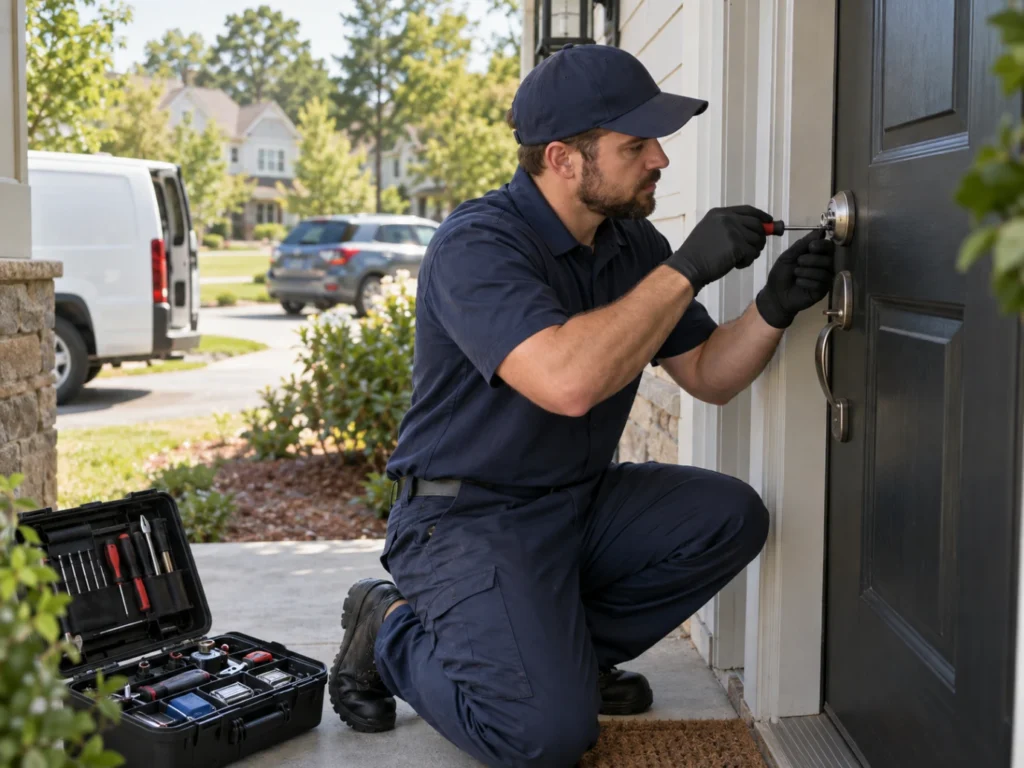
A lock problem rarely happens at a convenient time. You may be standing beside your car with the keys on the front seat, trying to open a front door after the key snapped, or closing your business for the night when a lock suddenly refuses to turn.
At that moment, you do not want a long explanation about locks. You want to know what went wrong, whether it can be fixed, and how you can get back inside without creating more damage.
That is where professional locksmith services come in. A locksmith can help with lockouts, lost keys, worn hardware, broken keys, security upgrades, and many other access problems involving homes, businesses, and vehicles.
What Can a Locksmith Help You With?
Many people only search for a locksmith after getting locked out. Opening doors is an important part of the job, but it is far from the only service available.
Depending on the situation and type of hardware, a locksmith may help with:
- House, office, and vehicle lockouts
- Lock repair and replacement
- Rekeying existing locks
- Broken key removal
- Deadbolt installation
- Car key replacement
- Smart lock installation
- High-security lock upgrades
- Master key systems
- Commercial access control
Not every technician works on every lock or vehicle. When you call, explain what is happening and provide any useful details. For vehicle work, share the year, make, and model. For a house or business, mention the kind of door and lock if you recognize it.
Locked Out? Avoid Forcing the Door
Getting locked out can make even a patient person act in a hurry. It is tempting to push a card between the door and frame, force the handle, or try a video tutorial with whatever tools happen to be nearby.
Those attempts can turn a basic lockout into a damaged lock, bent door frame, or broken window.
A locksmith can examine the entry point and decide how to approach it. Many ordinary locks can be opened without drilling, although that is not possible in every situation. The lock design, its condition, and any existing damage all affect the method used.
You Lost a Key—Now What?
Losing a key is different from temporarily leaving it inside. The key may be gone for good, and you may not know who could find it.
If there is any chance that the key can be connected to your address or business, consider having the affected locks rekeyed. Rekeying changes the working parts inside a compatible lock so the missing key can no longer open it. You receive a new key while keeping the existing lock hardware.
However, rekeying is not always the right answer. A lock that is badly worn, loose, corroded, or damaged may need to be replaced instead. A local locksmith can inspect it and explain which option makes more sense.
Moving Into a New Home
Moving day comes with plenty of boxes, paperwork, and unfinished jobs. Changing access to the home should be near the top of that list.
Even if the seller gives you several keys, there is no way to know how many copies were made over the years. A former tenant, cleaner, contractor, neighbor, or family member might still have one.
You may not need to replace every lock. If the hardware is in good condition, rekeying can prevent the old keys from working. It is also a good time to check exterior doors, deadbolts, strike plates, and locks on garages or storage areas.
When a Key Breaks in the Lock
Keys wear down little by little. A small crack, bent edge, or worn cut may not seem serious until the key breaks inside the cylinder.
If that happens, stop turning it. Pushing another key, screwdriver, or piece of wire into the opening can move the fragment deeper and damage the lock.
A locksmith can remove the broken piece and inspect the cylinder afterward. Sometimes the key was simply old. In other cases, the lock itself is stiff, misaligned, or failing. Fixing the reason behind the break can help prevent the replacement key from meeting the same fate.
Do Not Ignore a Lock That Keeps Sticking
A stubborn lock often gives plenty of warning before it stops working completely. Perhaps the key must be pulled back slightly before it turns. Maybe the deadbolt catches on the frame, or the handle has started feeling loose.
These small annoyances are worth checking.
The problem might be a worn key, internal damage, loose hardware, or a door that has shifted with normal use. Seasonal changes can also cause some doors to swell or move just enough to affect alignment.
Repairing the issue early may be simpler than dealing with a failed lock when you are trying to leave for work or close your business.
Residential Locksmith Services
Home locksmith services deal with more than front-door lockouts. A residential locksmith may rekey a property, replace damaged locks, install deadbolts, remove broken keys, or help set up compatible smart locks.
Good home security depends on the whole doorway—not only the lock. A quality deadbolt cannot do its job properly if the door frame is cracked or the strike plate is barely attached.
If you are considering an upgrade, ask the locksmith to examine the door, frame, and existing hardware together. That creates a more useful picture of what should be repaired or replaced.
Commercial Locksmith Services
Business access can become complicated quickly. Employees change, keys are copied, storage areas require different permissions, and frequently used doors begin to wear out.
A commercial locksmith may help with lock repair, rekeying, high-security hardware, master key systems, panic hardware, and electronic access control. The right setup depends on the property and the way employees use it.
A small office might only need a simple master key plan. A larger building may benefit from electronic credentials that can be activated or removed without changing every lock.
Business owners should also review access after an employee leaves, a key disappears, or a break-in damages an entry point.
Automotive Locksmith Services
Car locks and keys have changed considerably. Many newer vehicles use transponder keys, remotes, proximity fobs, or push-button ignition systems rather than basic metal keys.
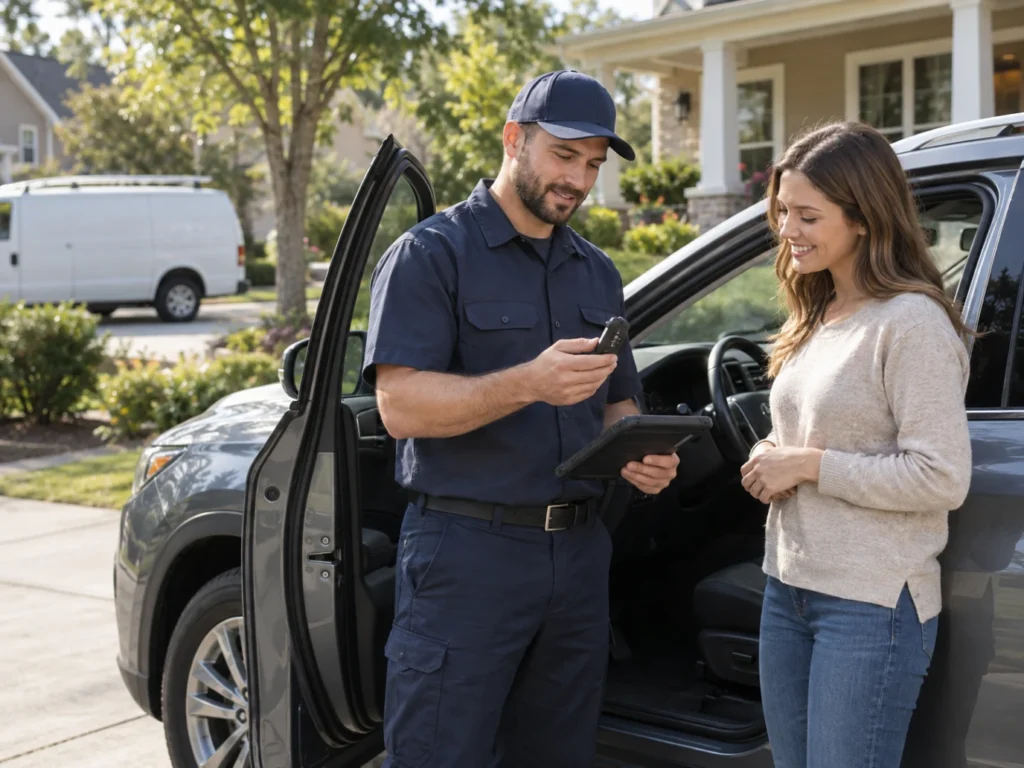
An automotive locksmith may be able to unlock a vehicle, replace a lost key, extract a broken key, or program certain fobs. Capabilities vary by vehicle, so give the locksmith accurate information before scheduling the work.
You should also expect to show identification and proof that you own or are authorized to access the vehicle. A responsible locksmith will want to verify that before completing the job.
How to Choose a Local Locksmith
People in a lockout often call the first number they see. Take a minute to confirm whom you are hiring before approving the work.
Ask for the company name and an estimated price. Find out whether there is a service-call charge and what could cause the final cost to change. When the technician arrives, request an explanation before drilling or replacing anything.
A trustworthy locksmith should be willing to:
- Identify the business clearly
- Explain the proposed work
- Discuss expected charges
- Ask for proof of access or ownership
- Get approval before changing the job
- Provide a receipt when the work is complete
Be careful with prices that sound unrealistically low. A vague quote can become much more expensive after someone arrives. Clear questions at the beginning can prevent an unpleasant surprise later.
Locksmith Services in Raleigh, NC
A lockout, broken key, or failing lock can throw off your entire day, but you do not have to make the problem worse by forcing the hardware.
Safety Locksmith Services assists with residential, commercial, and automotive lock and key needs in Raleigh, North Carolina. Tell us what happened, where the problem is located, and what kind of lock or vehicle is involved. We can then discuss the appropriate service and confirm current availability.
For locksmith services in Raleigh, call Safety Locksmith Services at (919) 999-8221.
Frequently Asked Questions
Can a locksmith open a door without damaging it?
Many locks can be opened using methods that do not damage the door or hardware. However, the lock type, its condition, and any previous damage determine what is possible. A locksmith should inspect the situation before recommending drilling or replacement.
Is it better to rekey or replace a lock?
Rekeying may be suitable when the lock works properly but you want old keys to stop working. Replacement is usually worth considering when the hardware is damaged, unreliable, badly worn, or no longer meets your security needs.
Can a locksmith make a car key if I lost every copy?
In many cases, yes. The locksmith’s ability to make and program a replacement depends on the vehicle’s year, make, model, and key system. Provide those details when calling.
Should I change the locks after moving?
It is sensible to change access after moving into a previously occupied property. Rekeying compatible locks can stop old keys from working without requiring complete hardware replacement.
What should I do if my key is stuck?
Do not keep twisting or pulling forcefully because the key may snap. Gently release pressure from the door and try again once. If the key remains stuck, contact a locksmith before the lock or key suffers more damage.
What details should I give the locksmith?
Provide your location, the type of property or vehicle, and a straightforward description of the problem. Mention whether a key is lost, broken, or trapped inside the lock. For automotive service, include the vehicle’s year, make, and model.
How much do locksmith services cost?
Pricing depends on the requested service, lock type, replacement parts, location, and time of service. Ask for an estimate and information about possible additional charges before authorizing the job.